
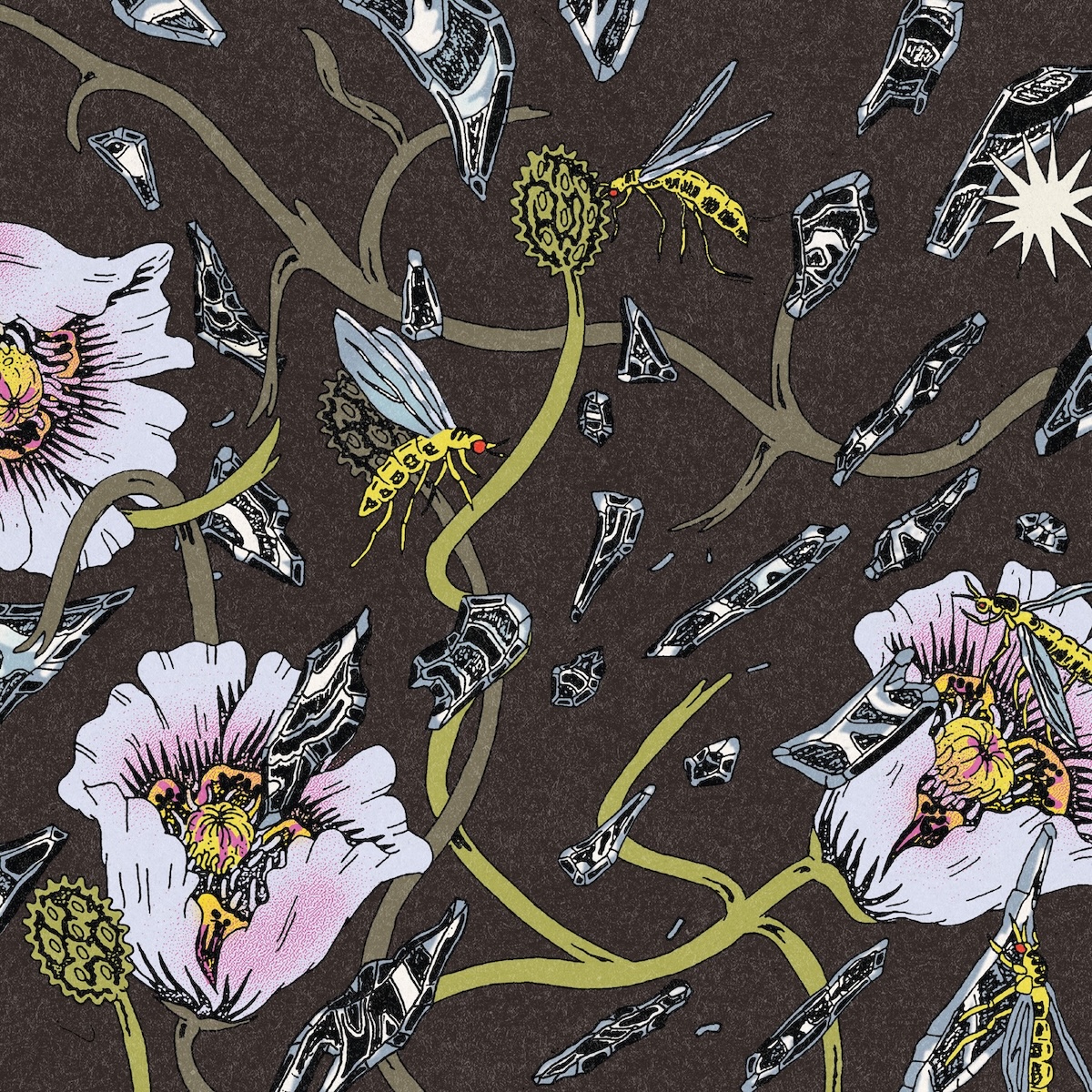
How does it feel to break free from inertia, the natural tendency to resist change? This question has been the center point of Janus Rasmussen’s new album, titled “Inert”. Built as a backstory behind the songs, it explores embracing the freedom of experimentation. Musically, a blend of all things electronic, it does not provide easy answers. No, that would not be interesting. Instead, “Inert” is an invitation to discover its concept through restless beats, immersive cinematic textures, and vocals, which, for the first time, take the central place.
One half of the critically acclaimed duo, Kiasmos, Janus Rasmussen introduces a wide spectrum of electronica as part his album’s sound design. After all, “Inert” is a journey. And its sonic exploration is a gateway to finding artistic freedom. When I listen to it, with my eyes mandatorily closed, I can see images of the Deep North. The Faroe Islands, where Janus was born, surrounded by the freezing waters of the Atlantic Ocean. And the flashbacks from Reykjavik, Iceland, where he is based now.
Having built his signature sound for over a decade now, Janus’ style combines a broad sonic spectrum, blending electronic and organic vibes. He creates his own story immersed in loops, beats, textures and an underlying sense of unexplainable melancholy. The final result? A fascinating experience in discovering the inner beauty of music. Reaching the depths of the Arctic circle and drawing from the northern sensitivity. A state of mind which is so exquisitely unique that it makes you want to dive in and stay there forever.
That’s what “Inert” has been for me. What will it be for you? Read on and find out!

BARTEK: I would imagine that to a lot of people the Faroe Islands must sound like a mysterious and dreamy place. What does the everyday life look like over there?
JANUS RASMUSSEN: It is a very modern place in almost every sense, much like anywhere else, just on a much smaller scale. The entire population is around 55,000 people, with the capital being around 20 to 22,000. That naturally shapes how people interact. You will often run into the same faces again and again, and in many cases, people know of each other. There is a saying that everybody knows everybody, which might have been closer to the truth in my parents’ generation, but less so now.
Growing up there musically, MTV played a big role. It was broadcast across the islands, or at least in the capital area, so a lot of my early influences came from watching music videos. It feels almost strange now, considering MTV does not really show music videos anymore. Outside of that, discovering music meant ordering CDs from abroad and waiting weeks for them to arrive. I was the kid ordering something completely weird, then waiting for that call two months later saying it had finally arrived.
The local scene reflects what you would find anywhere else. Pop, rock, electronic music, hip hop. It is very much part of a modern global culture.
You are currently based in Reykjavik, Iceland, which I had the pleasure of visiting last year. What has drawn you to this place, and what do you appreciate about it the most?
I initially came here on tour back in 2004 with my old metal band. We drove the ring road over two weeks and met a lot of people along the way. That trip opened the door to the Icelandic music scene for me, and I started spending more time here, eventually moving to Reykjavik a few years later.
What I appreciate most now is the scale of the city. It feels small and big at the same time. There is a tightly knit creative community, especially within music, but also a constant flow of international energy through tourism and travel.
Everything is here. Cinemas, swimming pools, studios, everyday life. My studio is part of a larger creative space with many other producers and musicians, which creates a really inspiring environment. There is constant exchange, collaboration, and a healthy sense of competition that pushes everyone forward.
You are just about to release your new solo album, “Inert”. What is your main focus this time, and how does it differ from your previous productions?
The main focus was to be as honest as possible with myself. I wanted to bring everything I have done over the years into one place without filtering it too much. Singing, club-driven production, ambient soundscapes, all of it.
It became less about fitting into a defined idea and more about allowing the different parts of me as a musician to exist together. It felt like the right time to step outside of any expectations and just follow instinct.
I am really happy with how it turned out, and I feel like I have grown a lot through the process.
What impact, if any, would you say being part of Kiasmos has had on your own musical style, songwriting, and lyrics?
It has had a huge impact. It is a major part of my life. Kiasmos started as something that developed very quickly, and working with Ólafur has been incredibly formative. He is a brilliant composer and producer.
We complement each other in a way that brings out the best in both of us. Every project we do together teaches me something new, both in production and songwriting. Over time, that dialogue has become sharper and more intuitive.
What is most important to you when working on your solo projects, as opposed to your collaboration with Ólafur Arnalds in Kiasmos?
With solo work, the most important thing is staying true to my own sensibilities in the moment. It is about trusting what feels honest while I am creating it.
I often think of it as a form of documentation. These projects become snapshots of where I was emotionally and creatively at a specific time. Something I can return to later and understand myself through.
Out of all the singles from “Inert” that you have released so far, which one would you say is most representative of the entire album, and why?
I would say “Drain” represents the album most clearly. It has vocals, lyrical focus, and a mix of organic, beat-driven and atmospheric elements that run throughout the record.
It also carries a kind of raw energy that defines the album for me. It felt like the right opening statement. Almost like saying, this is Inert, this is where I am right now.
The energy of tracks such as “Fumes” or “Murk” feels quite restless, almost nervous. On the other hand, “Bones” and “Drain” sound more chilled or reflective. What was your intention behind this contrast?
There was no fixed intention. I did not overthink the direction while writing. Some days I would arrive in a more introspective state and create something reflective. Other days I would be in a more chaotic, energetic mindset and that would come through in the music.
For example, “Fumes” came together very instinctively one morning without much thought. It just happened quickly, and the rest followed naturally. That is how the album works as a whole. It is open, reactive, and exploratory rather than structured around a concept.
On “Inert”, your vocals take a much more central role. What was important to you when writing the lyrics for the album? Is there a common thread or recurring topic throughout the songs?
I see the lyrics almost like fragments of poetry. They are open-ended by design and not meant to explain too much. More than meaning, I am interested in evoking images or emotional states.
They can feel abstract or even obscure, but there is usually a very personal truth behind them. In a way, they make sense most clearly to me, and I have become comfortable with that.
That openness feels important. It allows the listener to bring their own interpretation into it.
What would you like listeners to feel while listening to “Inert”, and after the final song fades out?
If people feel slightly more open or emotionally liberated after listening, then that is enough for me. The album is meant to move through different emotional states and textures. It is not linear. It shifts and changes, sometimes abruptly.
I hope people can sense that honesty in it, and maybe find something of their own experience reflected in it.
Are there any electronic music producers you are currently especially impressed by?
I have been drawn more towards IDM and experimental electronic music recently. Artists who are not afraid to break structure or work outside of predictable formats.
Aphex Twin has always been a reference point in that sense. Artists like Clark and Ross from Friends also inspire me, especially in how they blend genres and textures in unexpected ways.
Oneohtrix Point Never is another. The sound design and atmosphere in his work feel completely unique. There is a strong sense of identity in all of them, which I find very inspiring.
What are your plans for “Inert” in terms of promotion, live performances, and touring?
I am currently building a live setup from the ground up.
It is a challenging record to translate to the stage because it moves between vocals, club energy, and more ambient sections. Finding a way to bring all of that together is a process, but an exciting one. It is a very different approach from what I have done before, and that makes it feel fresh to work on.
Finally, if you had to choose one song from “Inert” that you are personally most proud of, which one would it be, and why?
I would choose “Evil”. It is one of the most personal songs on the record for me. Both lyrically and sonically it feels very close to where I was emotionally when I made it. I am also very happy with the vocal performance.
It is not necessarily a single in a traditional sense, but it carries a lot of meaning for me. I had been holding onto it for years, so finally releasing it feels significant.
Photo: Press release
More information: Instagram I Facebook I TikTok I Spotify I YouTube
0 comments on “ALBUM PREMIERE: Janus Rasmussen “Inert””